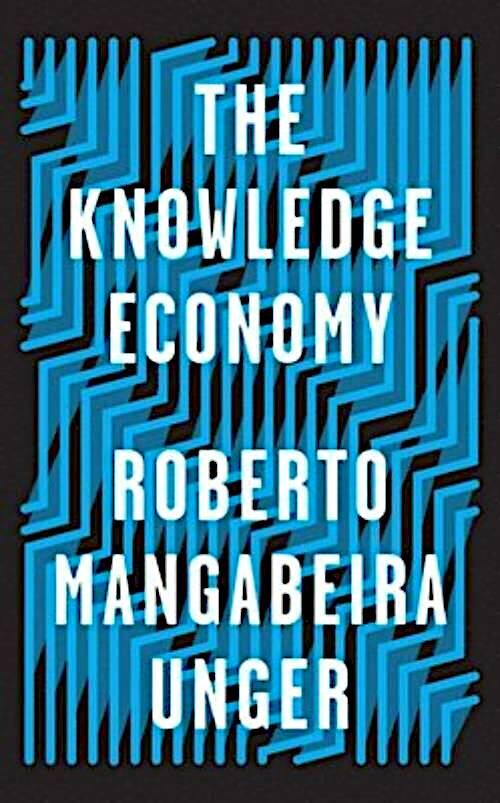
The knowledge economy
Inbunden bok. Verso. 2019. 298 sidor.
Mycket gott skick. Skyddsomslag i mycket gott skick. "Analysis of our economic present and future"
Inrikes enhetsfrakt Sverige: 62 SEK

Förlagsfakta
- ISBN
- 9781788734974
- Titel
- The knowledge economy
- Författare
- Unger, Roberto Mangabeira
- Förlag
- Verso
- Utgivningsår
- 2019
- Omfång
- 298 sidor
- Bandtyp
- (hardback
- Språk
- English
- Baksidestext
- "Revolutionary account of the transformative potential of the knowledge economy Adam Smith and Karl Marx recognized that the best way to understand the economy is to study the most advanced practice of production. Today that practice is no longer conventional manufacturing: it is the radically innovative vanguard known as the knowledge economy. In every part of the production system it remains a fringe excluding the vast majority of workers and businesses. This book explores the hidden nature of the knowledge economy and its possible futures. The confinement of the knowledge economy to these insular vanguards has become a driver of economic stagnation and inequality throughout the world. Traditional mass production has stopped working as a shortcut to economic growth. But the alternative--a deepened and socially inclusive form of the knowledge economy--continues to lie beyond reach in even the richest countries. The shape of contemporary politics on both the left and the right reflects a failure to come to terms with this dilemma and to overcome it. Unger explains the knowledge economy in the truncated and confined form that it has today and proposes the way to a knowledge economy for the many: changes not just in economic institutions but also in education, culture, and politics. Just as Smith and Marx did in their time, he uses an understanding of the most advanced practice of production to rethink both economics and the economy as a whole"--
Verso
9781788734974